
scroll icon

Breast Implant Breast Implant

Removal / Replacement Removal / Replacement

Women chose to remove or replace their breast implants for a variety of reasons. This can include a desire to change their proportions as well as addressing complications of breast implants.

We have over 25 years’ experience with cosmetic breast surgery and can guide you through your options.

Request a consultation

Women chose to remove or replace their breast implants for a variety of reasons. This can include a desire to change their proportions as well as addressing complications of breast implants.

We have over 25 years’ experience with cosmetic breast surgery and can guide you through your options.

Request a consultation

Breast Implant Breast Implant

Removal / Replacement Removal / Replacement

scroll icon

Removal or Replacement

Breast implants can be replaced, but they can also be removed only. Removing breast implants is sometimes referred to as a ‘breast explant’. Replacing breast implants is sometimes colloquially referred to as a ‘boob job replacement’.
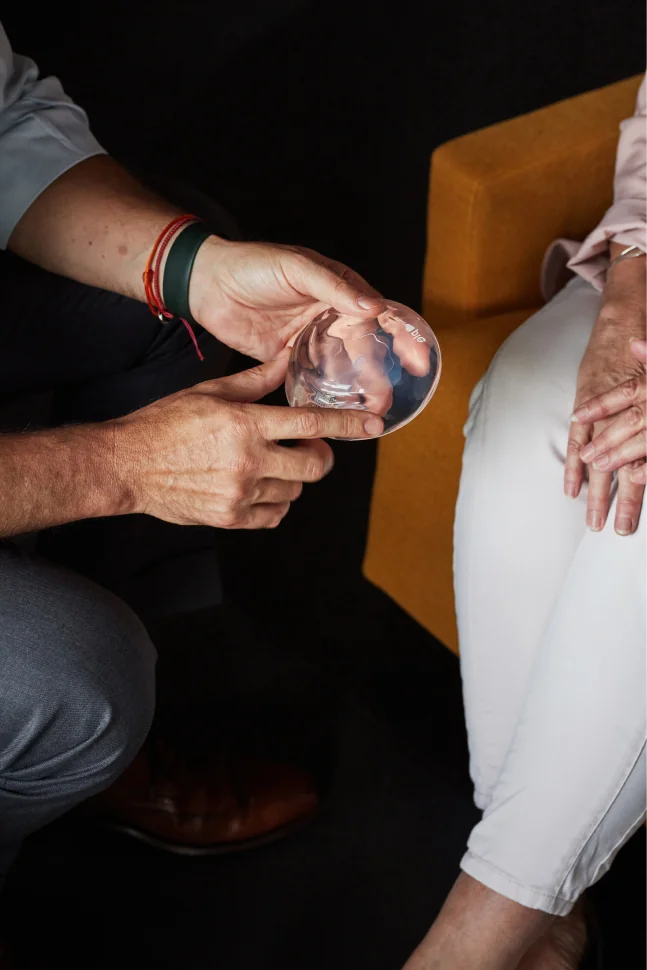
Breast implants can be replaced, but they can also be removed only. Removing breast implants is sometimes referred to as a ‘breast explant’. Replacing breast implants is sometimes colloquially referred to as a ‘boob job replacement’.

01

Why do some women choose to have their breast implants removed? Why do some women choose to have their breast implants removed?

1. Desire for Change

Some women choose to remove their breast implants for cosmetic reasons, including:
– A change in desired appearance
– A change in their body proportions (eg. weight gain or loss, pregnancy)

2. Addressing Implant Complications

Others remove their implants due to the following complications that may occur:

Malposition of breast implants includes movement of the implant from the original optimal placement, as well as rotation of teardrop-shaped implants.

Encapsulation, also known as capsular contracture, is where the body rejects the implant as a foreign material. The normally soft membrane around the implant hardens, which can result in the breast feeling firmer, and sometimes distorting the shape. It is not known exactly why this occurs for some and not others.

Breast implant rupture can occur with trauma to the breast or stress to the implant. If this occurs it is recommended to have the implant removed and replaced within 12 months. For this reason, it is recommended to have a breast scan if you notice pain or change in shape to the breast or after trauma to the breast.

If these complications occur, it is recommended to have the implant removed and replaced.

3. Undesirable Cosmetic Effects of Older Implants

Some women also change their implants due to undesirable cosmetic effects of older implant technology. Saline implants were previously commonly used and can produce a ‘rippling’ effect, where the salt water in the implant causes a visible ripple in the overlying breast and skin. If we replace saline implants with the newer silicone implants (which feel more like a natural breast) we can reduce this rippling.

1. Desire for Change

Some women choose to remove their breast implants for cosmetic reasons, including:
– A change in desired appearance
– A change in their body proportions (eg. weight gain or loss, pregnancy)

2. Addressing Implant Complications

Others remove their implants due to the following complications that may occur:

Malposition of breast implants includes movement of the implant from the original optimal placement, as well as rotation of teardrop-shaped implants.

Encapsulation, also known as capsular contracture, is where the body rejects the implant as a foreign material. The normally soft membrane around the implant hardens, which can result in the breast feeling firmer, and sometimes distorting the shape. It is not known exactly why this occurs for some and not others.

Breast implant rupture can occur with trauma to the breast or stress to the implant. If this occurs it is recommended to have the implant removed and replaced within 12 months. For this reason, it is recommended to have a breast scan if you notice pain or change in shape to the breast or after trauma to the breast.

If these complications occur, it is recommended to have the implant removed and replaced.

3. Undesirable Cosmetic Effects of Older Implants

Some women also change their implants due to undesirable cosmetic effects of older implant technology. Saline implants were previously commonly used and can produce a ‘rippling’ effect, where the salt water in the implant causes a visible ripple in the overlying breast and skin. If we replace saline implants with the newer silicone implants (which feel more like a natural breast) we can reduce this rippling.

02

Do I need to have my breast implants removed after a certain time period? Do I need to have my breast implants removed after a certain time period?

It’s a common misconception that implants need to be changed after a certain period of time. The great news is that this is not the case; implants don’t need to be removed if they are not causing any issues.

It’s a common misconception that implants need to be changed after a certain period of time. The great news is that this is not the case; implants don’t need to be removed if they are not causing any issues.

03

Can I change the size of my implants? Can I change the size of my implants?

Yes; when we replace breast implants we can use a different size.

If you would like to increase your breast size, during your consultation you try on different sizing implants to work out what proportions you like. We then use this sizing information in conjunction with your current implants to work out the volume of your new breast implants.

If you would like to decrease your breast size, we consider your current breast implant volume, your current bra cup size, and the bra cup size you would like to achieve to work out what implant replacement volume may be best to achieve your goals.

Yes; when we replace breast implants we can use a different size.

If you would like to increase your breast size, during your consultation you try on different sizing implants to work out what proportions you like. We then use this sizing information in conjunction with your current implants to work out the volume of your new breast implants.

If you would like to decrease your breast size, we consider your current breast implant volume, your current bra cup size, and the bra cup size you would like to achieve to work out what implant replacement volume may be best to achieve your goals.

04

What type of scars could I expect? What type of scars could I expect?

At The Doctors’ Studio, we use the inframammary incision for breast implant removal and replacements. This is a scar that sits in the crease under the breast. This scar usually heals well and is difficult to see.

At The Doctors’ Studio, we use the inframammary incision for breast implant removal and replacements. This is a scar that sits in the crease under the breast. This scar usually heals well and is difficult to see.

Recovery Recovery

We perform breast implant removal and replacement surgeries under a general anaesthetic in a day hospital. You will be able to rest and recover in your own bed on the night of surgery, and most people return to work after one week.

We like to make sure you are well supported in your recovery journey. We include all reviews for the first 12 months with our nurse or doctor in the cost of surgery.

We perform breast implant removal and replacement surgeries under a general anaesthetic in a day hospital. You will be able to rest and recover in your own bed on the night of surgery, and most people return to work after one week.

We like to make sure you are well supported in your recovery journey. We include all reviews for the first 12 months with our nurse or doctor in the cost of surgery.

01

The Recovery Journey The Recovery Journey

Breast implant removal and replacement surgery is performed under a general anaesthetic in a day hospital. You can leave the hospital if you are feeling well after a couple of hours of post-operative observation.

The first few days

The chest is most tender in the first few days after surgery and managed with pain relief tablets. While some people manage at home without any trouble, others find it more comfortable to have help from family or friends for a few days.

After a week

Our surgical nurse will review you 5 to 7 days after your surgery to assess your recovery. They will check your incisions and healing and provide information on how to care for your incisions to minimise scarring. All stitches used in the surgery are dissolvable.

Most people return to work 1 week after surgery. However, if high levels of physical activity or lifting are involved, you may not be able to resume these activities for 2 to 4 weeks after surgery.

We recommend avoiding underwire bras, activities that bounce the breasts (such as jogging and aerobics), as well as pools and spas for the first month to ensure optimal healing. We will give tailored advice about how to resume your normal level of exercise and activity.

After a month

There is swelling in the first few weeks as the tissues heal; this settles gradually and is usually minimal by about 1 month after surgery. The size of the breasts at 1 month after surgery is what they will be long term. The breasts continue to soften in the first 2 to 3 months after surgery.

Breast implant removal and replacement surgery is performed under a general anaesthetic in a day hospital. You can leave the hospital if you are feeling well after a couple of hours of post-operative observation.

The first few days

The chest is most tender in the first few days after surgery and managed with pain relief tablets. While some people manage at home without any trouble, others find it more comfortable to have help from family or friends for a few days.

After a week

Our surgical nurse will review you 5 to 7 days after your surgery to assess your recovery. They will check your incisions and healing and provide information on how to care for your incisions to minimise scarring. All stitches used in the surgery are dissolvable.

Most people return to work 1 week after surgery. However, if high levels of physical activity or lifting are involved, you may not be able to resume these activities for 2 to 4 weeks after surgery.

We recommend avoiding underwire bras, activities that bounce the breasts (such as jogging and aerobics), as well as pools and spas for the first month to ensure optimal healing. We will give tailored advice about how to resume your normal level of exercise and activity.

After a month

There is swelling in the first few weeks as the tissues heal; this settles gradually and is usually minimal by about 1 month after surgery. The size of the breasts at 1 month after surgery is what they will be long term. The breasts continue to soften in the first 2 to 3 months after surgery.

*Please note, all after photos are three months post-procedure. Outcomes shown are only relevant for this patient and do not guarantee similar results for other patients and will vary according to genetics, diet and exercise.
Q&A Q&A

01

What are the risks of cosmetic surgery? What are the risks of cosmetic surgery?

Making the decision to have cosmetic surgery is a serious one, and patients considering a procedure should also keep in mind that they need time to recover, they will need support, and possibly time off work. They may also need other therapies such as massage and compression garments.

During your consultation we will discuss the range of options available to you and recommend treatments that have the best chance of achieving your desired goals. Part of this conversation will cover, in more detail, the types of complications and risks that apply to your specific circumstances. In general, the risks and complications of surgery are:

• disappointing aesthetic outcome
• infection
• bleeding
• scarring
• significant asymmetry (a large difference between sides)
• pain
• change in skin sensation (eg. numbness)
• allergic reaction
• anaesthetic complications
• prolonged recovery and wound healing
• collections of fluid

All of these may result in the need for further treatment or surgery.

Making the decision to have cosmetic surgery is a serious one, and patients considering a procedure should also keep in mind that they need time to recover, they will need support, and possibly time off work. They may also need other therapies such as massage and compression garments.

During your consultation we will discuss the range of options available to you and recommend treatments that have the best chance of achieving your desired goals. Part of this conversation will cover, in more detail, the types of complications and risks that apply to your specific circumstances. In general, the risks and complications of surgery are:

• disappointing aesthetic outcome
• infection
• bleeding
• scarring
• significant asymmetry (a large difference between sides)
• pain
• change in skin sensation (eg. numbness)
• allergic reaction
• anaesthetic complications
• prolonged recovery and wound healing
• collections of fluid

All of these may result in the need for further treatment or surgery.

02

What are the risks relating to breast implant surgery? What are the risks relating to breast implant surgery?

Malposition of breast implants includes movement of the implant from the original optimal placement, as well as rotation for teardrop shaped implants.

Encapsulation, also known as capsular contracture, is where the body rejects the implant as a foreign material. The normally soft membrane around the implant hardens, which can result in the breast feeling firmer and sometimes distorting the shape of the breast. It is not known exactly why this occurs for some and not others.

Breast implant rupture can occur with trauma to the breast or stress to the implant. If this occurs it is recommended to have the implant removed and replaced within 12 months. For this reason, it is recommended to have a breast scan if you notice pain or change in shape to the breast or after trauma to the breast.

If these complications occur, it is recommended to have the implant removed and replaced.

Malposition of breast implants includes movement of the implant from the original optimal placement, as well as rotation for teardrop shaped implants.

Encapsulation, also known as capsular contracture, is where the body rejects the implant as a foreign material. The normally soft membrane around the implant hardens, which can result in the breast feeling firmer and sometimes distorting the shape of the breast. It is not known exactly why this occurs for some and not others.

Breast implant rupture can occur with trauma to the breast or stress to the implant. If this occurs it is recommended to have the implant removed and replaced within 12 months. For this reason, it is recommended to have a breast scan if you notice pain or change in shape to the breast or after trauma to the breast.

If these complications occur, it is recommended to have the implant removed and replaced.

03

Is there a Medicare rebate for this surgery? Is there a Medicare rebate for this surgery?

For some women, there may be a Medicare rebate applicable if an implant complication is the reason for implant removal. This can be determined during your consultation.

For some women, there may be a Medicare rebate applicable if an implant complication is the reason for implant removal. This can be determined during your consultation.

Start your journey with us.

A consultation is a chance for both you and Dr David Topchian to get to know each other. Dr Topchian has performed cosmetic surgery for thousands of women over the past 25 years. He can explore your aesthetic goals and options, and answer your questions. You can also learn about how we can support you on your journey.

Start your journey with us.

A consultation is a chance for both you and Dr David Topchian to get to know each other. Dr Topchian has performed cosmetic surgery for thousands of women over the past 25 years. He can explore your aesthetic goals and options, and answer your questions. You can also learn about how we can support you on your journey.

BOOK A CONSULTATION BOOK A CONSULTATION